An enclosure can retain its NEMA or UL Type rating after an HMI or data port is installed, provided the completed assembly meets the applicable environmental protection requirements. Properly selected, certified components and manufacturer-approved installation methods are essential. Type-rated panel interface connectors and HMI covers help protect these openings, while sealant alone cannot preserve a rating.
Imagine specifying a NEMA 4X enclosure for a food processing facility where equipment is regularly exposed to washdowns. The enclosure is selected, the drawings are approved, and everything looks good. Then come the additions: an HMI on the door, an Ethernet port for maintenance, and a few pilot lights. Is that enclosure still rated NEMA 4X once those openings have been made? Not necessarily. Every component installed through the enclosure can affect its environmental protection, making proper selection and installation essential to maintaining the intended rating.
What Does a NEMA or UL Type Rating Actually Mean?
Industrial control panel enclosures are designed to protect internal electrical equipment from environmental conditions such as dust, water, oil, and corrosion. The NEMA 250 standard establishes enclosure classifications based on their intended protection, while UL 50E provides requirements used to evaluate enclosure Type ratings. A UL Type rating identifies an enclosure classification evaluated through an applicable third-party certification process, whereas a NEMA Type designation alone does not necessarily establish independent certification.
Understanding these differences is especially important when selecting enclosures for harsh industrial environments. A Type 4X enclosure, for example, provides protection against hose-directed water and includes corrosion-resistance requirements, making it suitable for many washdown applications. A Type 12 enclosure, on the other hand, is commonly used in indoor manufacturing environments where protection against circulating dust and dripping noncorrosive liquids is needed. Here's how several common enclosure types compare:
| Enclosure Type | Environmental Protection | Approximate IP Comparison |
|---|---|---|
| Type 1 | Indoor protection against contact and limited falling dirt | IP20 |
| Type 3R | Outdoor protection against rain, sleet, and external ice formation | IP24 |
| Type 4 | Protection against windblown dust, rain, and hose-directed water | IP65/IP66 |
| Type 4X | Type 4 protection with additional corrosion resistance | IP65/IP66 |
| Type 12 | Indoor protection against dust, falling dirt, and dripping noncorrosive liquids | IP54/IP55 |
IP comparisons are approximate and should not be treated as direct equivalents. NEMA/UL Type and IP classifications evaluate different protection characteristics.
Every opening is a potential leak path. Match the rating, or lose it.
Why Do Cutouts Put an Enclosure's Rating at Risk?
An enclosure is designed to serve as a protective barrier, but every opening for an HMI, communication port, push button, or other door-mounted device introduces a potential path for contaminants. The cutout itself isn't necessarily the problem. What matters is whether the installed component and its mounting arrangement provide the protection required for the completed assembly. For example, installing a lower-rated device in a Type 4X enclosure without an appropriate protective arrangement can compromise its resistance to water and other environmental conditions.
Gaskets are another common concern, as improper placement, damage, or over-tightening mounting hardware can compromise the intended seal. HMIs introduce additional considerations, particularly when screens and bezels are exposed to cleaning chemicals, direct sunlight, physical contact, or repeated washdowns. While applying sealant around an opening might seem like a quick solution, sealant alone does not establish or maintain an enclosure's certified Type rating. That's why selecting properly rated components and following manufacturer installation requirements is so important.
There's also another opening worth considering: the enclosure door itself. When technicians repeatedly open a control panel for routine programming or diagnostics, internal equipment may be exposed to environmental contaminants and potentially energized components. Providing external access for these tasks can help reduce unnecessary door openings while supporting a safer, more efficient maintenance process.
What Does UL 508A Require for Openings in an Enclosure?
For UL 508A panel shops, maintaining environmental protection involves more than selecting a properly rated enclosure. UL 508A, the Standard for Industrial Control Panels, addresses how enclosure openings and installed components affect the completed panel assembly. Section 19 includes requirements for closing openings using suitable devices and mounting arrangements, with permitted combinations depending on the applicable enclosure Type classification.
In practical terms, an enclosure's original rating cannot simply be assumed to remain unchanged after modifications. The certification and installation requirements of each mounted component must be considered. A device with insufficient environmental protection may prevent the completed assembly from retaining its intended Type rating, even when the enclosure itself was originally certified for that environment. Selecting a component with an appropriate UL Type rating is an important part of the process, but the entire installation must meet applicable requirements.
The best approach is to evaluate these requirements during the design process rather than after fabrication. Review the applicable standard, confirm component certifications and installation instructions, and consult the panel shop's certification documentation or inspector when necessary. This helps prevent avoidable rework and ensures environmental protection remains part of the overall panel design.
Looking for more information on improving industrial control panel accessibility and safety? Explore our GracePort eBook to learn more about external access solutions, panel interface connectors, and practical considerations for industrial control panels.
How Do You Add a Data Port Without Losing the Rating?
Routine PLC programming, troubleshooting, and diagnostics often require technicians to connect laptops or other devices to equipment inside a control panel. A panel interface connector (PIC) is a door-mounted interface that provides access to internal communication or power connections from outside the enclosure. Instead of opening the cabinet each time a connection is needed, technicians can access the necessary ports through a dedicated external interface.
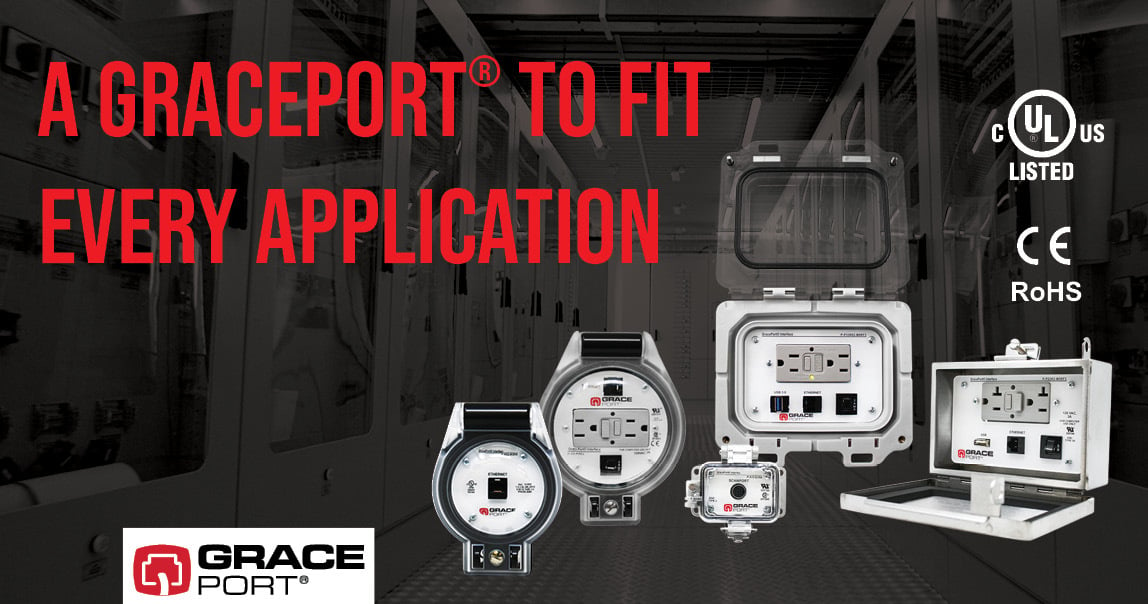
GracePort panel interface connectors are designed to provide this functionality through configurable connections such as Ethernet, USB, and power. GracePorts are UL Listed as environmental-rated accessories for enclosures, with different housing options available to meet specific application requirements. The appropriate UL Type rating depends on the selected housing and configuration, making it important to choose a connector suited to the enclosure and its operating environment. Proper installation also matters, including following the manufacturer's cutout template, gasket requirements, and mounting specifications.
Beyond environmental protection, external connections offer an important electrical safety benefit. By allowing certain maintenance and programming tasks to be performed with the enclosure door closed, panel interface connectors help reduce unnecessary exposure to energized components. Our article explaining what a panel interface connector is provides a closer look at how these devices work, while 5 Ways GracePort Simplifies PLC Programming Access explores their benefits for everyday maintenance and troubleshooting.
Keeping the enclosure door closed can also support electrical safety practices by reducing the need for certain interactions with equipment inside the panel. Learn more about reducing exposure when the door stays closed and how external connections fit into a broader electrical safety strategy. For additional selection considerations, our guide to choosing a panel interface connector covers the factors to evaluate when specifying a solution.
How Do You Protect an HMI on the Enclosure Door?
Human Machine Interfaces (HMIs) allow operators to monitor equipment, adjust settings, and interact with control systems directly from the panel. However, mounting an HMI creates an enclosure opening that must be properly protected. Even when an HMI carries an environmental rating, that rating may apply specifically to its front face when installed according to manufacturer instructions. It doesn't automatically account for every condition surrounding the completed installation, especially in environments where water, dust, chemicals, or physical contact are common concerns.
In washdown environments, repeated exposure to water and cleaning chemicals can affect sensitive equipment, while outdoor installations introduce additional concerns such as UV exposure. A properly rated HMI cover provides another protective barrier around the display. GracePort+ HMI covers feature a clear polycarbonate housing, a formed-in-place polyurethane gasket, metal snap latches, and a 316 stainless steel hinge pin. Standard covers are UL Listed and designed for demanding industrial environments, with IP66 protection and UV-rated construction for outdoor applications. Available configurations also provide flexible mounting options to accommodate different enclosure layouts.
When selecting an HMI cover, the entire installation must be considered, including any additional components mounted through the cover's faceplate. Although standard GracePort+ HMI covers are UL Listed, modifications and component selections can affect the certification of the finished configuration. Grace Technologies offers options incorporating GracePort components with HMI covers to support the cabinet's intended environmental protection when properly configured and installed. It's also important to note that GracePort+ provides the protective housing, while HMIs are purchased separately from their respective manufacturers. Our article on protecting HMIs explores why protecting these components matters for equipment reliability and long-term maintenance costs.
What Should You Check Before Cutting the Door?
Whether you're designing a new control panel or modifying an existing installation, taking a few minutes to verify the requirements before making a cutout can prevent significant problems later. Use this pre-installation checklist to help maintain the enclosure's intended environmental protection:
- Confirm the enclosure rating. Identify its UL Type classification and the environmental conditions it must withstand.
- Choose suitable components. Verify that each HMI, connector, or other door-mounted device supports the required protection.
- Check certification markings. Review the applicable UL Listing or Recognition information and installation conditions.
- Follow the cutout template. Confirm dimensions, clearances, and mounting orientation.
- Install gaskets correctly. Use the specified hardware and torque requirements to maintain the intended seal.
- Evaluate environmental exposure. Consider washdowns, chemicals, UV exposure, and other operating conditions.
- Document the installation. Record component ratings and relevant details on the panel drawings.
Existing installations may require additional evaluation before modifications are made. Our article on retrofitting existing control panels provides an example of the planning involved when adding permanent electrical safety devices to equipment already in service.
What Are the Most Common Questions About Maintaining Enclosure Ratings?
Does cutting a hole in a NEMA 4X enclosure void its rating?
Not automatically. A properly designed and installed opening may be compatible with retaining the enclosure's Type rating. However, the mounted device, its certification, gasket, and installation method must satisfy the applicable requirements. An unprotected opening or incorrectly installed component can compromise the completed assembly.
What's the difference between a NEMA rating and a UL Type rating?
NEMA 250 establishes enclosure classifications and environmental protection requirements. A UL Type rating involves evaluation and certification to applicable UL standards, such as UL 50E. A manufacturer may declare a NEMA Type rating without that designation alone establishing third-party certification.
Can I mount a lower-rated device on a NEMA 4X enclosure?
A lower-rated device may compromise the overall environmental rating unless the completed installation uses an approved arrangement that satisfies the applicable requirements. Do not assume the enclosure retains Type 4X protection based solely on its original label. Verify the specific device and installation with the relevant standards and certification information.
How do you protect an HMI in a washdown or outdoor location?
Select an HMI and mounting arrangement appropriate for the environment, and consider a type-rated protective cover where additional protection is needed. Evaluate water exposure, cleaning chemicals, UV resistance, gasket performance, and the complete installed assembly rather than relying only on the HMI's front-face rating.
Is a NEMA rating the same as an IP rating?
No. NEMA/UL Type ratings and IP ratings evaluate environmental protection using different criteria. IP ratings primarily describe protection against solid objects and water ingress, while certain NEMA Type ratings also address conditions such as corrosion or external icing. Their classifications should not be treated as directly interchangeable.
How Can You Maintain Protection Without Sacrificing Accessibility?
Adding an HMI or data port shouldn't mean choosing between convenient access and environmental protection. By selecting properly rated components, following installation requirements, and considering the completed assembly, panel designers can support both functionality and protection. GracePort panel interface connectors and GracePort+ HMI covers provide practical options for improving external access and protecting valuable equipment in demanding industrial environments.
Want to learn more about making your industrial control panels safer and more productive? Download our free GracePort eBook to explore panel interface connectors, available configurations, and practical ways to improve accessibility.

Want more educational content on electrical safety, industrial technology, and equipment reliability?
Stay SAFE, and have a GREAT week!