

Industries

  • Data Centers

  • Oil & Gas

  • Food & Bev

  • Mining & Metals

  • Water Wastewater

  • Manufacturing

Why Continuous Thermal Monitoring?

  • 24/7 real-time thermal monitoring
  • Early detection of developing failures
  • Monitor critical, hard-to-access equipment
  • Real-time alerts when temperature thresholds are exceeded
  • Reduce the need to open energized equipment
  • Prevent costly downtime and accelerate ROI
  • Align with NFPA 70B and IEEE 2969 maintenance standards

Continuous Thermal Monitoring Solutions

Multiple products for low to medium voltage applications

ctm-image-1

Fiber-based
Phosphor Thermometry
Ideal for Systems Rated ≥ 1000 Vac
 

ctm-image-2 (2)

Thermistor-Based
Phosphor Thermometry
Ideal for Systems Rated  600Vac
 

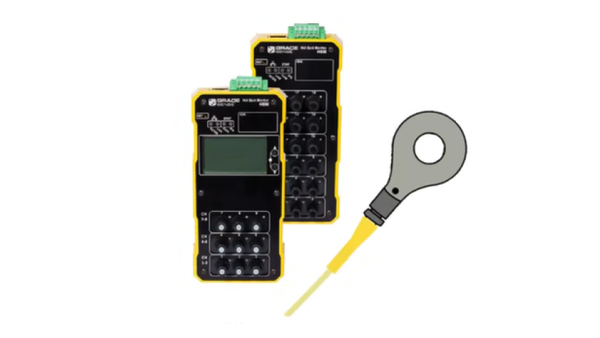
Low-Voltage Continuous Thermal Monitoring (CTM) system for equipment up to 600V

  • Highest standard of 70B compliance
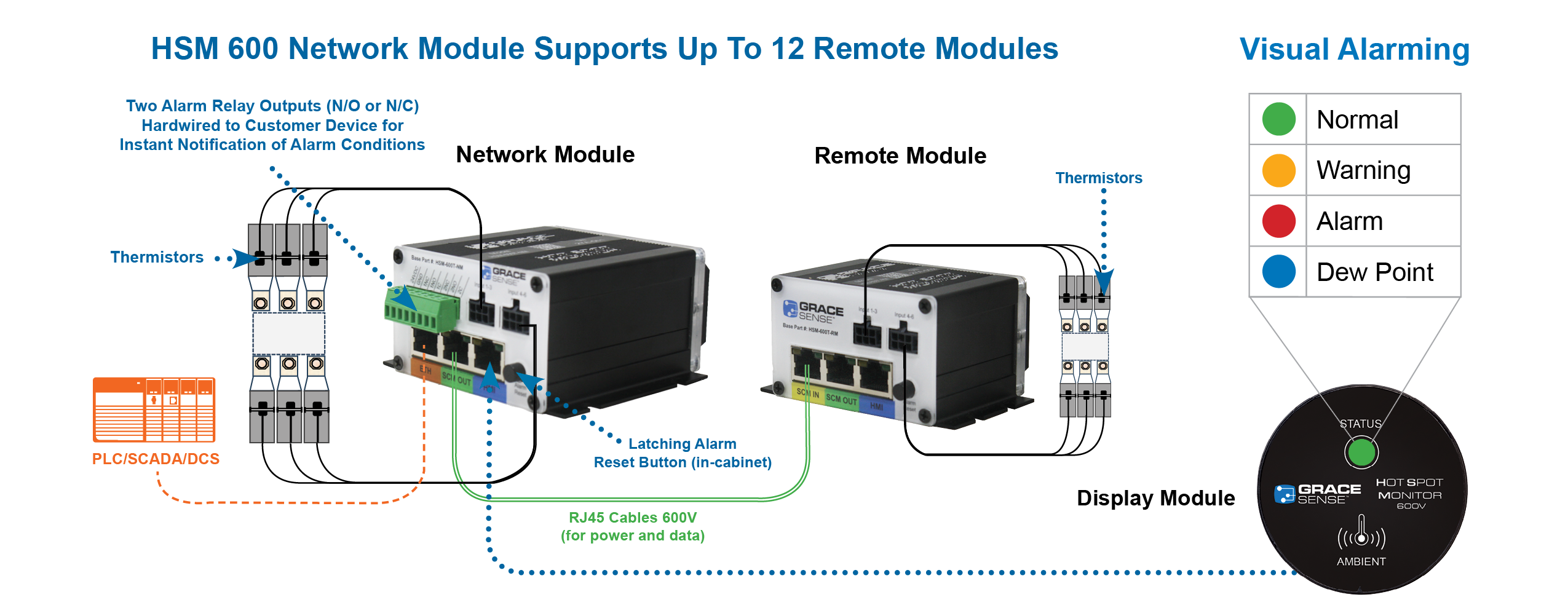
  • Powered thermistor-based sensors permanently install directly to key parts of equipment.
  • An indicator light and alarm system alert you if temperature goes beyond set levels
  • Catches signs of overheating early before incidents like sparks, fires, and arc flashes occur.
View Products
HSM 600_Application_8 (1)
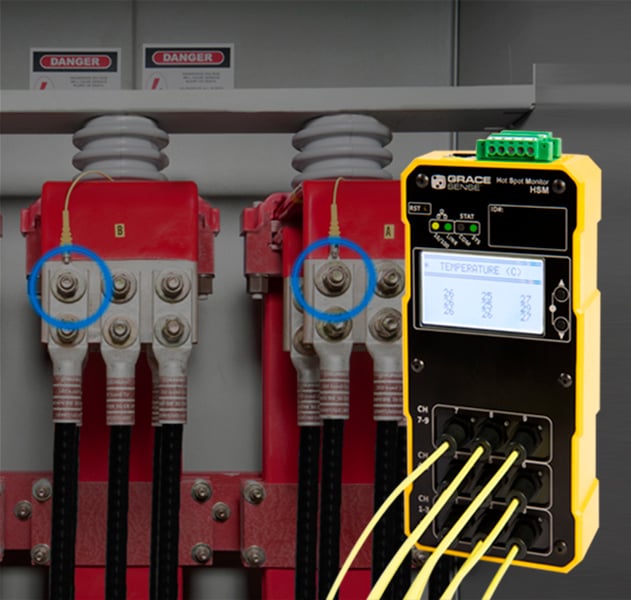
  • Direct Monitoring: Thermistor-based sensors (rated up to 600V) are mounted near critical components to continuously monitor potential failure points (PFPs).
  • ΔT Trending: Measured values are compared against ambient for early fault detection in compliance with NFPA 70B.
  • Phase Differential Monitoring: Notification when temperatures differ significantly between monitored phases.
  • User-Friendly Configuration: No apps required. Browser-based web utility eliminates the need for proprietary software.
HSM 600 Daisy Chain_001

Medium Voltage Continuous Thermal Monitoring (CTM) system for equipment greater than 1000V

HSM Application_001_Square
  • NPFA 70B Compliance
  • Powered thermistor-based sensors permanently install directly to key parts of equipment.
  • An indicator light and alarm system alert you if temperature goes beyond set levels
  • Catches signs of overheating early before incidents like sparks, fires, and arc flashes occur.
View Products
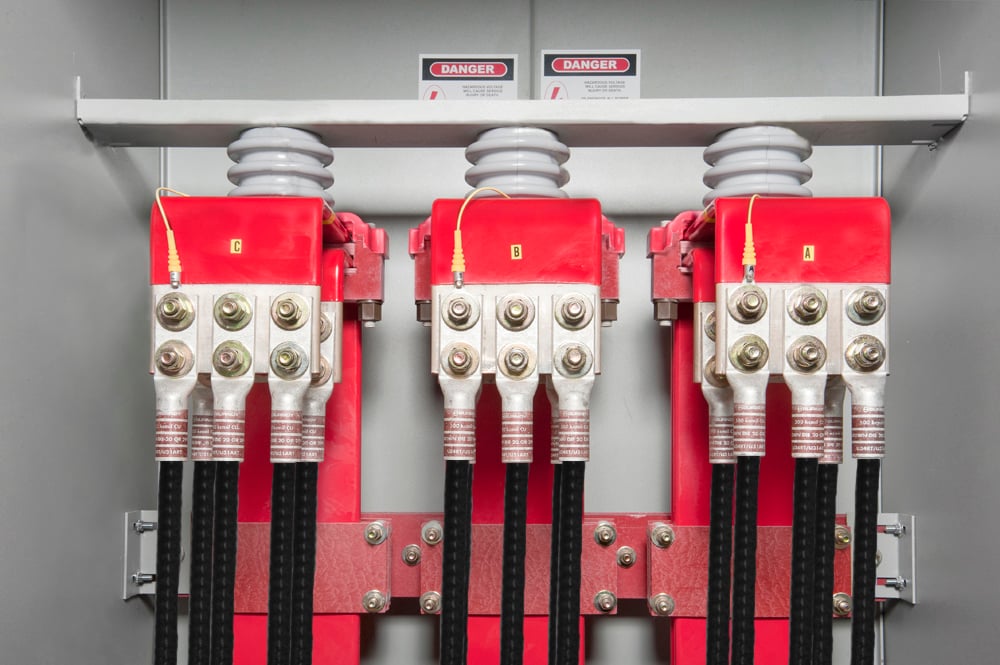
  • Direct Monitoring: Sensors are permanently installed at critical electrical connection points where failures typically begin.
  • Continuous Monitoring: Capture thermal changes caused by load shifts, vibration or loose connections that inspections often miss
  • Real-time Alerts: Notification when temperatures exceed thresholds
  • Fiber-optic probes: Measure temperature directly at the source, making them immune to electrical interference
  • Temperature Trends: Tracked over time help teams identify abnormal heat rise early
HSM_Video-Snip (1)

Want to reduce equipment downtime?

Talk with one of our continuous thermal monitoring experts. 

Talk to an Expert

Applications

 Thermal abnormalities in electrical equipment are commonly caused by loose or deteriorating connections, vibration, load imbalance, harmonics, and overloaded circuits. Continuous Thermal Monitoring helps detect these developing conditions early across switchgear, motor control centers, power distribution systems, transformers, bus ducts, and other critical electrical assets. 

  • electrical_services

    Switchgear

    Monitor main incomers, bus couplers, and feeder breakers

  • precision_manufacturing

    MCCs

    Track drawer connections, incoming/outgoing terminations.

  • outlet

    PDUs

    Watch critical bus joints and cable terminations.

  • graphic_eq

    Voltage Drives

    Monitor primary and secondary connections.

  • power_input

    RPPs

    Protect breaker connections in distributed power systems.

  • cable

    Bus Bars & Cables

    Track joints, splits, and termination points.

Integrations

 Integrates with common PLC and automation systems via Modbus TCP/IP and EtherNet/IP™ for seamless plant-wide monitoring. Configuration and data access are managed through a standard web browser interface, eliminating the need for specialized or proprietary software. 
  • memory

    PLC

  • dashboard

    SCADA

  • apartment

    CMMS

How it Compares

   IR Thermometer Gun   HSM 600  HSM Fiber Solution 
Voltage Rating  Any, requires open-door energized work  Up to 600VAC  Any voltage
Incident Energy Exposure                                          Yes                                      No                                         No
Inspection Frequency                    Intermittent snapshots Continuous 24/7                           Continuous 24/7
Sensors               IR Camera (line-of-sight only) Thermistor-based sensors           Phosphor Thermometry Sensing
Access to Hidden Points 
Data Logging 
Alarming 
Communication/Integration 
Calibration Required                                         Yes No                          No                         


The Risk Between Inspections

  • Unplanned Downtime is Expensive

    Unplanned electrical outages cost thousands per hour in lost production, emergency repairs, and equipment replacement, making early detection critical to equipment longevity.

  • Thermography Captures Moments, Not Trends

    Infrared thermography provides a snapshot during inspection windows, but developing issues between scans often go unnoticed and each energized panel opening introduces arc flash exposure.

  • Continuous Monitoring Closes the Gap

    Continuous Thermal Monitoring detects abnormal temperature trends early, reduces reliance on routine inspections, and minimizes unnecessary energized access improving both reliability and safety.

ChatGPT Image Feb 24, 2026, 09_27_16 AM (1)