A non-contact voltage tester is a handheld tool used to check for the presence of AC voltage, while a wearable voltage detector provides automatic alerts when a worker approaches detectable AC electric fields. The key difference is that one requires a deliberate check, while the other provides ongoing awareness. Neither verifies the absence of voltage.
Key Takeaways
- A non-contact voltage tester checks for voltage when someone actively uses it, while a wearable voltage detector provides automatic alerts throughout the workday.
- Neither device verifies the absence of voltage or replaces required electrical safety procedures.
- Using both tools gives electrical workers the benefits of deliberate spot checks and continuous proximity awareness.
Most electricians already have a non-contact voltage tester in their tool kit. It's a familiar, affordable tool that makes quick preliminary voltage checks convenient. So when a wearable voltage detector enters the conversation, it's understandable that the first question might be, "Isn't that just a tick tracer you wear on your wrist?"
While both devices use electric-field detection, they serve different purposes. Understanding those differences helps electricians, contractors, and safety managers determine where each tool fits into their electrical safety practices.
What Is a Non-Contact Voltage Tester?
A non-contact voltage tester (NCV tester) is a handheld device that detects electric fields associated with AC voltage without requiring direct contact with an energized conductor. When the sensing tip approaches a detectable electric field, the device typically responds with an audible beep, a flashing light, or both.
These testers are commonly used for preliminary voltage checks, circuit identification, and troubleshooting. Their convenience makes them a valuable addition to an electrician's everyday toolkit, particularly when a quick indication of potentially energized equipment is needed.
However, a voltage tester pen only provides information when someone deliberately uses it. It doesn't monitor the surrounding environment while sitting in a pocket or tool bag, and it won't alert a worker who unexpectedly approaches energized equipment without performing a check. This is where the distinction between handheld and wearable voltage detection becomes important.
What Are the Limitations of a Non-Contact Voltage Tester?
Although non-contact voltage testers are useful, their ability to detect voltage depends on the surrounding electrical conditions. Because these devices sense electric fields rather than directly measuring voltage, certain conditions can interfere with their readings.
For example, shielded or armored cables can prevent electric fields from reaching the tester. Closely spaced three-phase conductors may also produce fields that partially cancel one another, reducing the likelihood of detection. Wet cable jackets, insulation from ground, and weak batteries can affect performance depending on the tester's design and operating conditions.
False readings are another important consideration. A tester may indicate voltage because of nearby electric fields or capacitive coupling, even when the conductor being checked isn't energized. More concerning is a false negative, when the tester doesn't respond despite hazardous voltage being present.
Electricians should treat a positive indication seriously, but never rely on a negative indication alone to determine whether equipment is de-energized.
Wearable voltage detectors also sense electric fields, meaning some of these limitations can affect them as well. Their advantage isn't immunity to detection challenges, but the ability to provide alerts without requiring workers to initiate a separate check.
What Is a Wearable Voltage Detector?
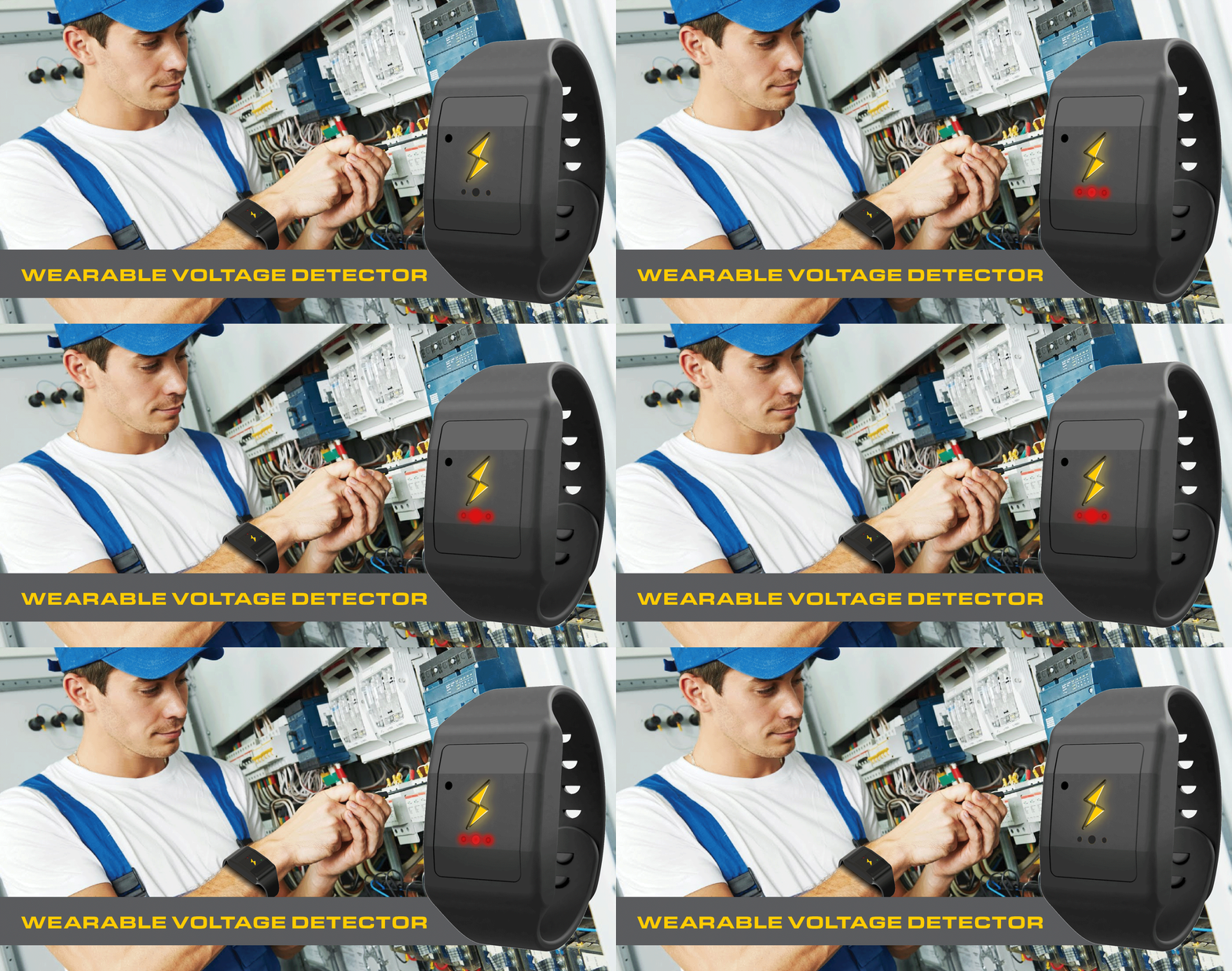
A wearable voltage detector is a device worn by an electrical worker that continuously monitors for detectable AC electric fields and provides proximity alerts when its operating conditions are met. Rather than requiring someone to retrieve a handheld tester, it remains active while the worker performs everyday tasks.
The Proxxi Band by Grace is an example of this technology. Worn on the wrist, it uses haptic vibration, audible alerts, and visual flashes to notify workers when nearby AC electric fields meet its detection threshold. This hands-free approach provides an additional opportunity to recognize potential electrical exposure, particularly during activities when workers aren't actively checking for voltage.
Wearable detection is intended to complement established electrical safety procedures, not replace them. For a closer look at the technology, explore How Does Wearable Voltage Detection Work?
How Do They Compare Side by Side?
Although both devices detect electric fields, their applications differ in several important ways.
| Feature | Non-Contact Voltage Tester | Wearable Voltage Detector |
|---|---|---|
| How it's used | Handheld and deliberately positioned near equipment | Worn throughout the workday |
| When it alerts | During an intentional voltage check | Automatically when detectable AC fields meet alert conditions |
| Hands-free operation | No | Yes |
| Alert type | Typically audible and visual | Vibration, audible, and visual |
| Detection location | Near the tester's sensing tip | Near the worker's wrist |
| Data collection | Typically none | Some systems, including Proxxi Hub, record alert information |
| Verifies absence of voltage | No | No |
| Best application | Preliminary spot checks and troubleshooting | Ongoing proximity awareness during electrical work |
The most important difference is when each device provides information. A handheld tester supports an intentional check, while a wearable can provide alerts during moments when a worker isn't actively looking for voltage.
Why Does Always-On Voltage Detection Matter?
Electrical work requires constant awareness, but even experienced electricians encounter distractions, unexpected conditions, and changes in their surroundings. A worker may be focused on completing a specific task without realizing they've moved closer to adjacent energized equipment.
Consider a technician performing maintenance inside an electrical cabinet. They've identified the equipment they're working on and followed the appropriate procedures, but while repositioning or reaching for a component, they move toward another energized section. Unless they're actively using a handheld tester, that tool won't provide a warning.
A wearable voltage detector offers an additional opportunity to recognize detectable electrical hazards during those moments. Because the device remains active throughout the task, it doesn't depend on the worker remembering to perform another preliminary check.
This always-on awareness is particularly valuable when considering electrical near misses. These situations may occur without resulting in injury, but they can reveal opportunities to improve work practices and hazard awareness. Learn more in What Is a Near-Miss Electrical Incident and Why Should You Care?
Some wearable systems, including the Proxxi Hub and Dashboard, can also provide managers with information about recorded voltage alerts. While an alert doesn't necessarily indicate that a near miss occurred, reviewing this information may help safety teams identify exposure patterns and determine where additional attention is warranted.
Wearable detection doesn't prevent electrical shock or guarantee that every hazard will be detected. Its value comes from providing another opportunity for workers to recognize potential exposure during the moments between deliberate checks.
Do You Still Need to Test Before Touch?
Yes. Neither a non-contact voltage tester nor a wearable voltage detector can verify the absence of voltage. This distinction is essential regardless of how frequently either device is used.
NFPA 70E addresses the process of establishing an electrically safe work condition, including verifying the absence of voltage with an adequately rated test instrument. Applicable requirements may also be satisfied through properly installed and used absence-of-voltage testing equipment.
A handheld NCV tester provides a preliminary indication, while a wearable provides proximity awareness. Neither establishes that a conductor is safe to touch, even when no alert is present.
Proxxi by Grace is designed to supplement existing electrical safety practices, not replace lockout/tagout, required testing, personal protective equipment, or other established procedures. For additional guidance, see What Is an Absence of Voltage Test? NFPA 70E Requirements Explained and How Proxxi Complements LOTO Procedures for Added Safety.
Where Does Each Tool Fit on a Jobsite?
A non-contact voltage tester is particularly useful when electricians need to perform quick preliminary checks, trace circuits, or investigate equipment during troubleshooting. It's a practical tool for situations where someone intentionally wants to check for the possible presence of AC voltage at a specific location.
A wearable voltage detector serves a broader awareness function. It remains with the worker while they move between tasks, work near electrical equipment, or encounter changing conditions throughout the day. This makes it an additional safeguard during moments when performing a deliberate check may not be at the forefront of someone's attention.
For electrical contractors, the goal shouldn't be choosing one device over the other. Combining both approaches allows crews to maintain familiar testing practices while introducing an additional layer of awareness. As we discussed in Where Wearable Voltage Detection Fits in the Hierarchy of Risk Controls, wearable technology should support a comprehensive electrical safety program rather than operate as a standalone protective measure.
Is a Wearable Voltage Detector Worth the Cost Compared to a Pen Tester?
For contractors managing equipment purchases across an entire crew, cost is a reasonable concern. Non-contact voltage testers are relatively inexpensive, and most electricians already own one. However, comparing the price of a wearable detector directly to a handheld tester overlooks the fact that they're designed to address different needs.
A handheld tester provides information during an intentional check. A wearable offers ongoing awareness, including situations when someone may approach energized equipment unexpectedly. That additional capability is what contractors should evaluate when considering the investment.
The potential consequences of an electrical near miss or injury extend beyond the immediate incident. Work interruptions, investigations, equipment damage, and lost productivity can all affect a business. Wearable alert information may also provide safety managers with insights they wouldn't otherwise have, helping support discussions about work practices and potential exposure.
For companies interested in exploring wearable detection, starting with a pilot program can make the decision more manageable. Testing the technology with a smaller crew provides an opportunity to gather feedback, evaluate its usefulness in actual working conditions, and determine whether broader implementation makes sense.
The question isn't whether a wearable can replace an inexpensive pen tester. It's whether adding continuous awareness provides meaningful value alongside the tools and procedures crews already use. Explore Electrical Contractor Safety: Hazard Protection with Wearable Detection for more information.
What Are the Most Common Questions About Voltage Detection?
Can a non-contact voltage tester give a false reading?
Yes. Non-contact voltage testers can produce false positives or fail to detect voltage under certain conditions. Shielded conductors, electric-field cancellation, environmental factors, and battery issues may affect their response. A negative indication should never be used alone to determine whether equipment is de-energized.
Can a wearable voltage detector replace a non-contact voltage tester?
No. A wearable voltage detector provides ongoing proximity awareness, while a handheld tester supports intentional spot checks. Both serve different purposes and can complement one another as part of established electrical safety practices.
Can either tool verify that a circuit is de-energized?
No. Neither device verifies the absence of voltage. Workers must follow applicable electrical safety procedures and use appropriately rated testing equipment before treating conductors as de-energized.
How far away does a wearable voltage detector alert?
Alert distance varies depending on the device, voltage level, settings, and surrounding conditions. There is no universal detection distance that applies to every situation. Workers should follow the manufacturer's instructions and never interpret the absence of an alert as confirmation that equipment is safe.
Does a wearable voltage detector work on DC voltage?
Capabilities vary by device, but the Proxxi Band detects AC electric fields and does not detect DC voltage. This distinction is especially important in facilities with DC electrical systems, including certain data center applications. Learn more in Where Wearable Voltage Detection Fits into a Data Center Safety Program.
How Can Both Tools Support a Safer Work Environment?
Non-contact voltage testers and wearable voltage detectors share similar detection principles, but they serve different purposes in electrical safety. One provides information during a deliberate check, while the other offers ongoing proximity awareness throughout the workday.
For electricians and contractors, using both tools can help bridge the gap between planned voltage checks and unexpected encounters with electrical hazards. Neither replaces proper testing or established safety procedures, but together they can provide additional opportunities to recognize potential exposure.
Interested in seeing how wearable voltage detection could fit your crew's safety program? Explore Proxxi by Grace and learn about our pilot program!

Want more electrical safety and maintenance insights delivered to your inbox?
Stay SAFE, and have a GREAT week!