Applying mission-critical lessons to arc-flash safety execution
Mission-critical environments like data centers force electrical safety programs to operate under real pressure. High available fault energy, dense distribution systems, and limited maintenance windows create conditions where execution discipline matters even more. The lessons discussed in our recent webinar go beyond one facility type. They highlight how visibility, verification, and coordination directly influence arc-flash risk when uptime expectations and electrical exposure intersect.
Understanding the Operational Context
Data centers operate in conditions that elevate every electrical safety decision. Available fault current is often significant. Distribution systems are tightly interconnected. Equipment is accessed frequently, and uptime expectations leave little room for disruption.
That environment does not change arc-flash principles, but it does influence how they must be executed.
In our recent webinar with Ken Sellars, CESCP, we focused on what repeated access, high energy levels, and operational coordination mean for arc-flash risk in practice. The more frequently equipment is opened, the more exposure opportunities exist. When available fault energy is high, tolerance for deviation narrows. When troubleshooting must occur within limited windows, sequencing becomes more complex than it appears on paper.
These conditions reinforce why disciplined verification matters.
In environments like this, verification cannot drift into assumption. Indicator lights may provide information about voltage presence, but they do not confirm absence of voltage. Test points are specifically designed to facilitate safer absence-of-voltage verification by relocating the point of work to outside the enclosure. The procedural requirement to verify remains the same. What improves is how controlled and repeatable that verification process can become.
Where Risk Develops
One of the most valuable takeaways from the webinar was recognizing where risk actually develops. It rarely begins in the written program. It develops in execution.
Risk tends to increase when:
• Equipment is accessed frequently across shifts
• System condition is not visible until covers are removed
• Troubleshooting occurs under operational time pressure
• Multiple teams influence task progression
These are normal operating patterns in mission-critical facilities.
Safety strategies that acknowledge those realities tend to be more resilient over time. Strategies that assume ideal sequencing often depend too heavily on perfect human performance.
Visibility and Better Sequencing
A consistent theme in the discussion was the role of visibility in improving decision quality. When voltage presence can be identified earlier in the workflow, teams gain context before engaging in higher-exposure steps.
That visibility does not eliminate PPE requirements. It does not replace formal absence-of-voltage testing. It supports more intentional sequencing.
Solutions such as Grace safe test points and ChekVolt devices align with this approach when integrated within a structured safety program. Test points support safer verification by moving the testing interface outside the enclosure. ChekVolt devices provide real-time voltage presence awareness. They can reduce unnecessary interaction with energized components while still requiring procedural confirmation.
The intent is not to simplify responsibility. It is to support disciplined execution under real operational pressure.
Watch the On-Demand Webinar
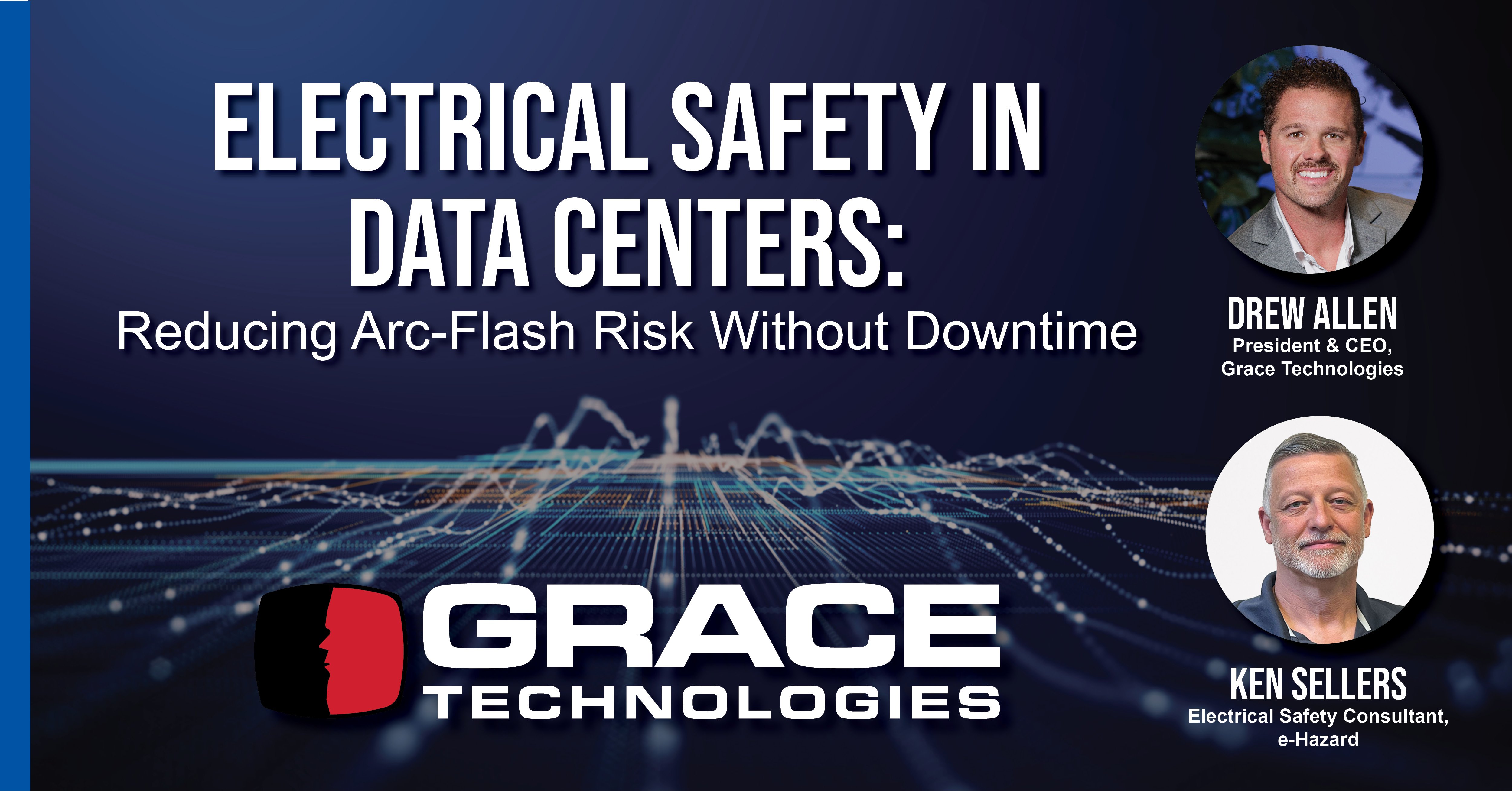
If this topic resonates with the way your team operates, I encourage you to watch the on-demand webinar with Drew Allen, President & CEO of Grace Technologies and Ken Sellars, Electrical Safety Consultant at e-Hazard. The full session expands on these execution patterns and how they influence arc-flash planning in mission-critical facilities.

Continue The Conversation
Electrical safety in data centers has changed because the way work is performed has changed. Organizations that focus on execution, verification, and real operating conditions are better positioned to reduce electrical risk while supporting reliability and performance.
Let us know how we can help improve safety across your operations.

To safer, smarter operations,